
It's probably happened to you: you walk through the field and see fruit on the ground, or you have a leftover part of the harvest that the truck didn't take because "it's not perfect." Sometimes we accept it as part of the business, but the truth is that this leak in profitability is a silent tax that you are paying every month.
It's not just a feeling of yours. According to the FAO Food Loss Index (2024), globally we lose 13.2% of production before it reaches the store. If you add to that that another 19% is wasted in sale or consumption (UNEP data, 2024), you realize that almost a third of all effort is wasted.
In the agricultural sector, what is not measured is not managed, and what is not processed is often lost. For many producers, surplus production or post-harvest losses are accepted as an "unavoidable cost" of the business; However, science and global economic data tell a different story: your greatest profit margin could be hidden in what today is considered waste, loss or “garbage.”
One of the biggest sources of leakage occurs when the producer is forced to sell all of his production immediately after harvest. The lack of processing infrastructure pushes producers to accept low market prices to prevent the product from rotting. In perishable crops (fruits and vegetables) the situation is critical, since it is estimated that between 25% and 50% of production is lost due to inadequate management and lack of technological preservation.
Furthermore, according to FAO data (2024), food waste is equivalent to losing 25% of all the water used in agriculture and an amount of energy that would generate billions of tons of unnecessary emissions. Each kilo of surplus that you do not use also carries with it costs of water, electricity, supplies and labor; and that is ultimately a financial loss.
Globally, these inefficiencies represent losses of approximately $940 billion annually. The Inter-American Development Bank (IDB) points out that in Latin America these losses reduce the producer's direct profitability by at least 15% annually.
In modern agroindustrial management, the difference between a subsistence operation and a highly profitable one is not only in the volume of harvest, but in the comprehensive use of biomass. Lack of surplus processing and poor waste management is not just a logistical problem; It is an "invisible tax" that eats into your cash flow. Therefore, to build a profitable, sustainable and efficient rural business, it is essential to talk about the full use of biomass.
What does it mean to take advantage of all biomass (total organic matter)?
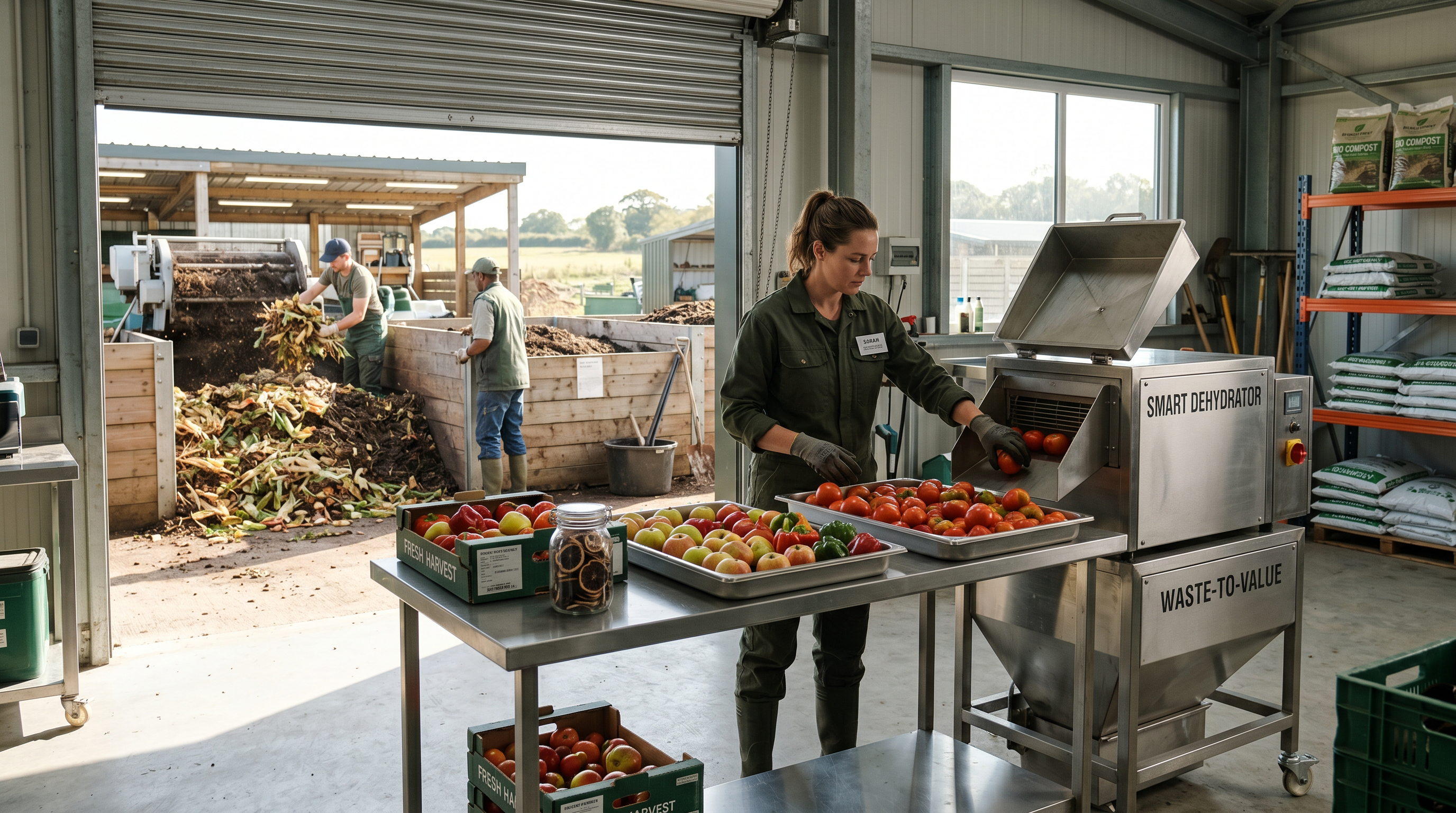
It is seeing your field as a "zero waste" factory, avoiding losses and waste through a complete cycle:
(Cycle one) In natura Product: Sold fresh to the highest price market.
(Cycle two) Surplus/Product: It is processed in your own factory to create pulps, dehydrated or preserved products with your own brand.
(Cycle three) Waste (peels, seeds, stems): They are transformed through circular processes. According to the ILO (2025), converting this waste into biofertilizers can reduce your chemical input costs by 30%.
(Result) The cycle is closed. What was previously "garbage" returns to the soil as fertilizer or goes on the market as a new product.
Practical example: The value of efficiency Let's take all this information to a real case: imagine that you have a harvest of 10 tons (10,000 kg) of a product that you sell for $0.50 per kilo. Your income potential is $5,000.
Without processing: Between harvest and arrival at the market you lose 15% (1,500 kg). In addition, the market rejects another 500 kg for being small or "ugly." You end up selling only 8,000 kg, earning $4,000. That is, you lost $1,000 along the way, in addition to having spent resources on those 2,000 kg that you never sold.
With industrial processes: If you add value, those "ugly" 500 kg stop being garbage and become raw material. When processed, that kilo that was worth $0.50 can become worth double or triple thanks to the added value. Not processing organic waste is ignoring an opportunity to directly reduce your operating costs. The transformation of waste into biofertilizers or biochar allows you to save up to 30% on the purchase of external inputs. You could even enter new markets, such as biogas or high-value products such as bioplastics and substrates for fungi.